

GHK-Cu Peptide Profile
Last updated: June 6, 2026
TL;DR
GHK-Cu is a naturally occurring copper-binding tripeptide (Glycyl-Histidyl-Lysine-Copper) used for skin repair, hair regrowth, and tissue healing. Standard injectable dose is 1-2 mg subcutaneously 2-3x per week. Topical creams use 0.05-0.2% concentration. It works by activating tissue remodelling, collagen synthesis, antioxidant pathways, and copper-dependent enzymes. Best known as an anti-aging skin peptide but increasingly used for wound healing, hair density, and post-cycle recovery.
What is GHK-Cu?
GHK-Cu (Glycyl-Histidyl-Lysine-Copper) is a tripeptide that binds copper ions. It occurs naturally in human plasma at levels of 200 ng/mL in young adults, falling to 80 ng/mL by age 60 – the decline correlates with slower wound healing, thinning skin, and weaker tissue repair. Researcher Loren Pickart identified it in 1973 while studying serum from young donors. The copper-bound form is the bioactive version – free GHK without copper has limited activity.
How does it work?
GHK-Cu activates multiple repair pathways:
- Stimulates collagen, elastin, and glycosaminoglycan synthesis in fibroblasts
- Activates copper-dependent enzymes including superoxide dismutase
- Modulates over 4000 human genes toward a more youthful expression pattern
- Reduces inflammation by suppressing pro-inflammatory cytokines
- Stimulates hair follicle proliferation in dormant follicles
The 2010 Pickart gene expression study showed GHK-Cu shifted 31.2% of human genes by at least 50% toward youthful patterns – one of the broadest documented gene-modulation effects of any peptide.
What dose should you use?
Two main routes – injectable and topical:
- Injectable: 1-2 mg SubQ, 2-3 times per week, near the area being targeted for systemic effects
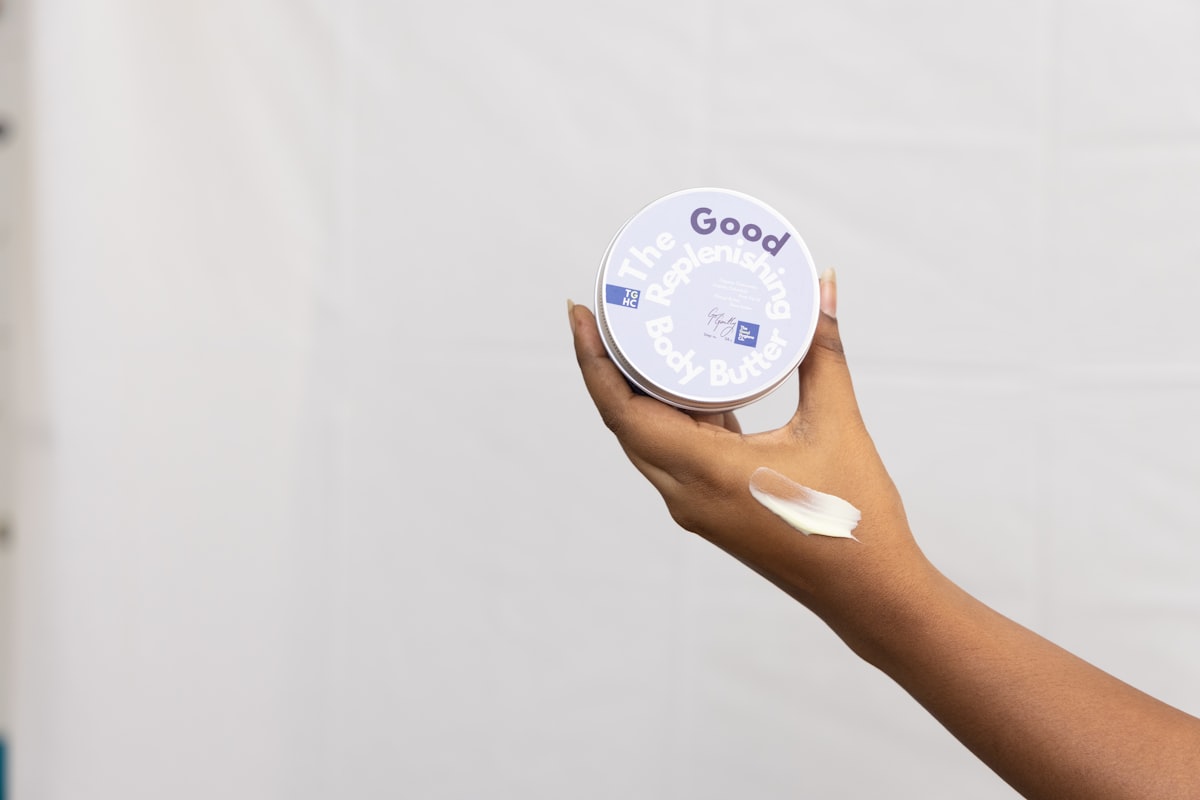
- Topical cream: 0.05-0.2% concentration applied twice daily for skin and hair
- Microneedling: low-concentration GHK-Cu solution combined with 0.5-1.0 mm dermaroller
For skin and hair, topical and microneedling outperform injection because the peptide can act directly at the target tissue. For wound healing or post-surgery recovery, SubQ injection near the site is more effective.
How long does a cycle last?
For anti-aging skin protocols: continuous use is fine – GHK-Cu does not downregulate its receptors. For injectable cycles aimed at systemic effects: 8-12 weeks, then a 4 week break. Topical creams used for wrinkles or hair density can be used indefinitely without tolerance issues. See our reconstitution guide for mixing and storage details.
Does it actually help with hair growth?
Moderate evidence yes. Multiple human studies show GHK-Cu topical applications increase hair shaft thickness, density, and follicle anagen-phase ratio over 12-24 weeks. The 2007 Pyo trial showed 30-40% increased hair growth in subjects with mild androgenetic alopecia. It is not as strong as finasteride or minoxidil on its own but stacks well with both. Microneedling-assisted application produces the strongest results.
What about wrinkles and skin tone?
Stronger evidence here. Topical GHK-Cu creams reduce visible wrinkles, increase skin thickness, and improve elasticity in controlled trials. The 2015 Pickart skin biopsy study showed direct fibroblast proliferation and new collagen deposition. Results appear gradually over 8-16 weeks, not days. The skin texture and tone improvements typically appear before wrinkle depth changes.
Does it help with wound healing?
This is the original use case – GHK-Cu was developed for chronic wound healing. Multiple human trials show accelerated closure of diabetic foot ulcers, surgical wounds, and burns. The copper component activates lysyl oxidase, which is required for collagen and elastin cross-linking. SubQ injection near a healing wound speeds repair noticeably compared to placebo.
What bloodwork should you track?
Minimal panel because GHK-Cu is hormonally inert:
- Baseline CBC if running long-term injectable cycles
- Copper and ceruloplasmin if dosing above 3 mg/day (rare to need)
- Liver enzymes ALT/AST if combining with multiple peptides
No need to track testosterone, IGF-1, or estradiol – GHK-Cu does not interact with hormonal pathways.
What are the side effects?
Exceptionally well tolerated. Reported in trials at standard doses:
- Mild injection-site irritation (most common)
- Temporary blue-green tint at injection site from copper
- Occasional mild lightheadedness in week 1
- Topical creams may cause initial mild flushing or warmth
No reports of hormonal disruption, insulin resistance, or organ toxicity at studied doses. The copper component is in trace amounts well below toxicity thresholds.
Can you stack it with other peptides?
Yes – GHK-Cu plays well with most peptide stacks because it does not compete for receptors. Common pairings: with BPC-157 and TB-500 for tissue repair, with CJC-1295/Ipamorelin for the anti-aging stack, with collagen peptides orally for skin support. See our BPC-157 guide for the most common healing combo.
How do you reconstitute and store it?
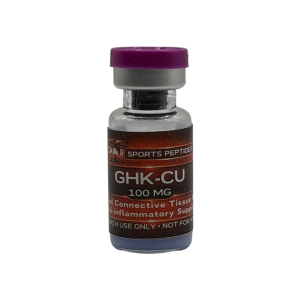
GHK-Cu ships as a turquoise-blue powder (the copper gives the colour). Reconstitute with bacteriostatic water – 2 mL bac water in a 50 mg vial gives 25 mg/mL or 2.5 mg per 0.1 mL. Refrigerated reconstituted vials are stable for 30-45 days. Lyophilized vials store in the freezer for 2+ years. Topical creams require pharmaceutical-grade compounding.
Is GHK-Cu legal in Canada?
Sold for research purposes only – Health Canada has not approved injectable GHK-Cu for human use. Topical cosmetic-grade GHK-Cu is legally sold in skincare. Not banned by WADA. Full federal classifications are at Health Canada Drugs and Health Products.
Sources
- Pickart L, et al. The human tri-peptide GHK and tissue remodeling. J Biomater Sci Polym Ed, 2008.
- Pickart L, et al. GHK-Cu may prevent oxidative stress in skin by regulating copper and modifying expression of numerous antioxidant genes. Cosmetics, 2015.
- Pyo HK, et al. The effect of tripeptide-copper complex on human hair growth in vitro. Arch Pharm Res, 2007.